Medicine Wheel Clinic
85 Auburn Park Drive, Auburn
Payment per SAMHSA: no payment in its SAMHSA record
Accreditation in its SAMHSA record: CARF
Kinds of care
DetoxResidential and inpatient rehabIOP, PHP, outpatientMAT programs (medication-assisted)Dual-diagnosis careAlcohol treatmentDrug treatmentPrograms by populationSober homes and transitional housingPayment for rehabRecords as of November 16, 2026
Treatment is still possible without insurance. Care can be paid by a sliding fee, by payment help, or by county, state or federal funds. Our SAMHSA listings show 245 such programs.
It helps to have the ZIP code and the insurance card at hand, whether yours or a loved one's. A paid referral line: calls are answered by a partner and never by a program in these listings.
12 of 245 listings, per SAMHSA FindTreatment.gov, November 16, 2026. Sort: most listed services first, then A–Z. Listing is free; a partner pays for the referral line. How listings are ordered.
Unsure where to look first? Call (229) 270-2704 A paid referral line: calls are answered by a partner and never by a program in these listings.
85 Auburn Park Drive, Auburn
Payment per SAMHSA: no payment in its SAMHSA record
Accreditation in its SAMHSA record: CARF
119 Sycamore Drive, Athens
Payment per SAMHSA: Medicaid · Medicare · Private health insurance
Accreditation in its SAMHSA record: CARF
1710 Commerce Road, Athens
Payment per SAMHSA: Medicaid · Medicare · Private health insurance
Accreditation in its SAMHSA record: Joint Commission
3430 Highway 20 SE, Conyers
Payment per SAMHSA: Medicaid · Medicare · Private health insurance
Accreditation in its SAMHSA record: CARF
1116 East Ponce De Leon Avenue, Decatur
Payment per SAMHSA: Medicaid · Medicare · Private health insurance
Accreditation in its SAMHSA record: CARF
P.O. Box 3597, Augusta, GA 30904 (street address not published by SAMHSA)
Payment per SAMHSA: no payment in its SAMHSA record
Accreditation in its SAMHSA record: CARF
2314 Sullivan Road, Atlanta
Payment per SAMHSA: Sliding fee, by income
Accreditation in its SAMHSA record: CARF and Joint Commission
3543 Highway 81, Loganville
Payment per SAMHSA: Medicaid · Medicare · Private health insurance
Accreditation in its SAMHSA record: CARF
104 North Commerce Street, Hinesville
Payment per SAMHSA: Medicaid · Private health insurance
Accreditation in its SAMHSA record: CARF
1820 Water Place SE, Atlanta
Payment per SAMHSA: Private health insurance
Accreditation in its SAMHSA record: CARF
Macon, GA 31206 (street address not published by SAMHSA)
Payment per SAMHSA: Medicaid · Medicare · TRICARE
Accreditation in its SAMHSA record: CARF
1003 Mary Street, Waycross
Payment per SAMHSA: Medicaid · Medicare · Private health insurance
Sources: public agencies, not advertisers
In Georgia, 245 listings offer a lower-cost route: 110 with a sliding fee scale, 225 with public funding and 146 with payment help. Most are in Atlanta (25), Savannah (12) and Decatur (9). From the SAMHSA locator, November 16, 2026[1].
What the listings show
The Georgia Department of Behavioral Health and Developmental Disabilities (DBHDD) is the state's public safety net, and its first job is serving people who are uninsured. It contracts with community providers in all six regions of the state for outpatient and residential addiction treatment, funded in part by the federal substance use block grant. To reach a state-funded provider near you, call or text 988.
Among the Georgia listings, 110 have a sliding fee scale, 146 list payment help, and 225 report public money from the county, state or federal level for people who cannot pay. Any program that receives federal Substance Use Block Grant money has to give priority to people who inject drugs and to pregnant women.
Medicaid is accepted at 195 of these listings too, so if you are eligible, Medicaid coverage widens the choice. Get the price first, then enter it in the cost calculator, and the self-check can point you to the level of care to ask for.


All 245 listings with low-cost options, by the care they offer:
Not sure which listing to call? Call (229) 270-2704 A paid referral line: calls are answered by a partner and never by a program in these listings.
Other payment on file
Many entries list several kinds of payment. That is useful if your coverage changes partway through treatment.
Cash is also accepted by 225 of the 245, and 110 list a sliding fee scale.
Free and confidential, answered 24/7. A paid referral line: calls are answered by a partner and never by a program in these listings.
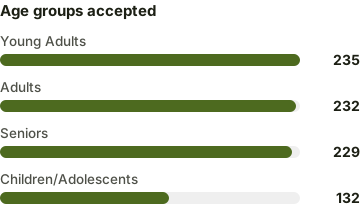
245 listings, counted by who they serve:
Most often: Young Adults (235 of 245), Adults (232 of 245) and Seniors (229 of 245).
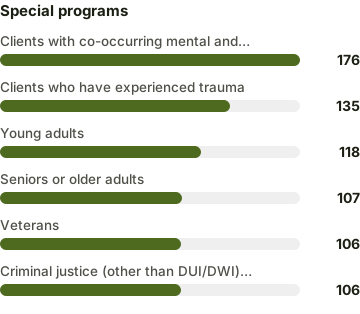
Most often: Clients with both mental health and substance use disorders (176 of 245), Clients who have experienced trauma (135 of 245) and Young adults (118 of 245).
Most often: Sign language for clients who are deaf or hard of hearing (74 of 245), Spanish (54 of 245) and Other languages (excluding Spanish) (16 of 245).
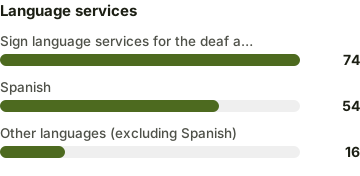
Each program reports this itself.
Most often: Outpatient (221 of 245), Regular outpatient treatment (105 of 245) and Outpatient treatment with methadone, buprenorphine or naltrexone (77 of 245).

Most often: Mentoring/peer support (155 of 245), Housing services (146 of 245) and Assistance with obtaining social services (102 of 245).

Most often: Buprenorphine used in Treatment (80 of 245), Naltrexone used in Treatment (66 of 245) and Methadone used in Treatment (37 of 245).

Most often: Cognitive behavioral therapy (232 of 245), Telemedicine/telehealth therapy (206 of 245) and Substance use disorder counseling (130 of 245).

We took each of Georgia's 159 county centers and measured the straight-line distance to the nearest facility in the listings with low-cost options. The median is 9.2 miles, and 7 counties are over 30 miles away.
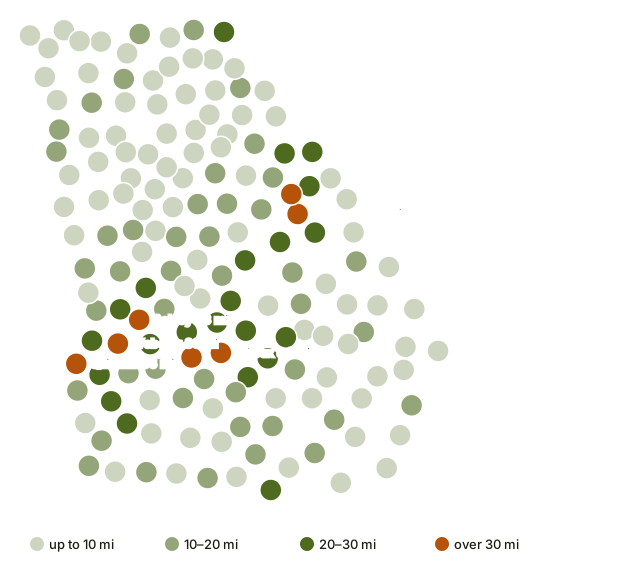
| County | Miles to closest |
|---|---|
| Quitman County | 34.7 |
| Wilcox County | 33.8 |
| Glascock County | 33.8 |
| Webster County | 33.5 |
| Schley County | 32.6 |
| Crisp County | 32.6 |
| Warren County | 32.4 |
| Randolph County | 29.3 |
Unsure where to look first?
Check which listings offer a sliding fee or public funds, and what the application involves.
A paid referral line: calls are answered by a partner and never by a program in these listings.
The facility counts use SAMHSA's November 16, 2026 snapshot.
The Georgia Rehab directory editors held this page up against the sources above on November 16, 2026. How it works.
Care without insurance, asked and answered
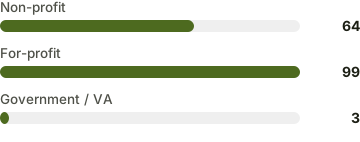
Out of 341 Georgia facilities in the SAMHSA locator, 245 fit this payment type (November 16, 2026). Their records show residential care at 60 and detox at 33. Of these, 99 list medication for opioid use disorder and 221 list outpatient care; 132 of the 245 take teens and 54 work in Spanish. Ask which of the 245 has an opening: use the referral line (the line is paid; calls are answered by a partner).
It ties the price to your income and how many people live in your household.
You bring proof of income, a pay stub or a tax return for example, and the program works out your fee from it. Across Georgia, 110 entries list a sliding fee scale and 146 list payment help. Check with each which proof of income it accepts, or use the referral line (the line is paid; calls are answered by a partner).
At programs paid through the federal Substance Use Block Grant, pregnant women and people who inject drugs have to be admitted first.
Everyone else usually gets a place in order, so there may be a waiting list. Public funding is reported by 225 of the 245, and 195 accept Medicaid as well, so a Medicaid application can widen the list.
Atlanta has the most entries (25), followed by Savannah (12), Decatur (9) and Athens (8).
In Atlanta these entries make up 60% of the 42 listed programs; across Georgia, entries with low-cost options show up in 101 cities. See the table on this page for the leading cities and each one's share of entries.
Among these 245 listings, 195 take Medicaid, 175 take private insurance, 162 take Medicare, 111 take TRICARE, 225 take cash and 110 use a sliding fee scale. Look up Medicaid, private insurance, Medicare, TRICARE, or run your own numbers in the calculator.
The programs above can tell you which plans they bill; the referral line is the other option.
A paid referral line: calls are answered by a partner and never by a program in these listings.
Payment for rehab