


Athens Area Commencement Center
1175 Mitchell Bridge Road, Athens
Payment per SAMHSA: Private health insurance
Accreditation in its SAMHSA record: CARF
Kinds of care
DetoxResidential and inpatient rehabIOP, PHP, outpatientMAT programs (medication-assisted)Dual-diagnosis careAlcohol treatmentDrug treatmentPrograms by populationSober homes and transitional housingPayment for rehabRecords as of November 16, 2026
Many people begin their care with detox. Staff keep watch and help with withdrawal. It can be dangerous to stop heavy drinking without help. 55 SAMHSA listings in Georgia offer it.
It helps to have the ZIP code and the insurance card at hand, whether yours or a loved one's. A paid referral line: calls are answered by a partner and never by a program in these listings.
12 of 53 programs (55 SAMHSA listings for 53 programs; one card per provider), per SAMHSA FindTreatment.gov, November 16, 2026. Sort: most listed services first, then A–Z. Listing is free; a partner pays for the referral line. How listings are ordered.
Unsure where to look first? Call (229) 270-2704 A paid referral line: calls are answered by a partner and never by a program in these listings.
1175 Mitchell Bridge Road, Athens
Payment per SAMHSA: Private health insurance
Accreditation in its SAMHSA record: CARF
3455 Harris Road, Waycross
Payment per SAMHSA: Sliding fee, by income
Accreditation in its SAMHSA record: CARF
3020 Holcomb Bridge Road, Norcross
Payment per SAMHSA: Private health insurance
Accreditation in its SAMHSA record: CARF
5454 Yorktowne Drive, Atlanta
Payment per SAMHSA: Medicaid · Medicare · Private health insurance
Accreditation in its SAMHSA record: Joint Commission
811 Livingston Court, Marietta
Payment per SAMHSA: Private health insurance · TRICARE
Accreditation in its SAMHSA record: Joint Commission
8292 Highway 41, Ringgold
Payment per SAMHSA: Medicare · Private health insurance · TRICARE
Accreditation in its SAMHSA record: CARF
6132 Hawkinsville Road, Macon
Payment per SAMHSA: Medicaid · Medicare · Private health insurance
Accreditation in its SAMHSA record: CARF and Joint Commission
592 Medical Park Drive, Gainesville
Payment per SAMHSA: Medicare · Private health insurance
Accreditation in its SAMHSA record: CARF
4500 North Point Parkway, Alpharetta
Payment per SAMHSA: Private health insurance · TRICARE
Accreditation in its SAMHSA record: Joint Commission
230 Riverstone Parkway, Canton
Payment per SAMHSA: Medicaid · Medicare · Private health insurance
Accreditation in its SAMHSA record: CARF
11725 Pointe Place, Roswell
Payment per SAMHSA: Private health insurance
Accreditation in its SAMHSA record: Joint Commission
2000 16th Avenue, Columbus
Payment per SAMHSA: Medicaid · Medicare · Private health insurance
Accreditation in its SAMHSA record: Joint Commission
Sources: public agencies, not advertisers
Georgia: 55 SAMHSA-listed facilities for medical detox (November 16, 2026)[1]; most sit in Savannah (4), Athens (3) and Atlanta (2). 47% take Medicaid; 9 have a sliding fee scale.
What the listings show


| Substance listed | Facilities |
|---|---|
| Opioids | 54 |
| Alcohol | 35 |
| Benzodiazepines | 34 |
| Methamphetamines | 34 |
| Cocaine | 33 |
Unsure where to look first?
Savannah has 4 of the 55. Reach a program, or dial the referral line below.
A paid referral line: calls are answered by a partner and never by a program in these listings.
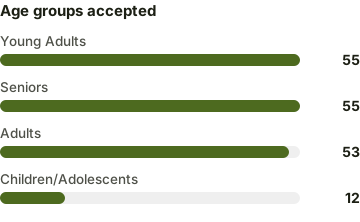
55 listings, counted by who they serve:
Most often: Young Adults (55 of 55), Seniors (55 of 55) and Adults (53 of 55).
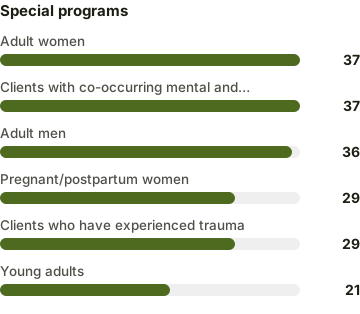
Most often: Adult women (37 of 55), Clients with both mental health and substance use disorders (37 of 55) and Adult men (36 of 55).
Most often: Sign language for clients who are deaf or hard of hearing (19 of 55), Spanish (5 of 55) and Other languages (excluding Spanish) (1 of 55).
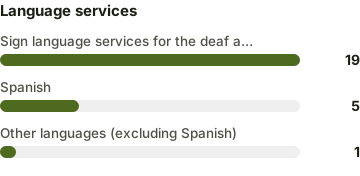
Each program reports this itself.
Most often: Outpatient (44 of 55), Regular outpatient treatment (38 of 55) and Outpatient treatment with methadone, buprenorphine or naltrexone (35 of 55).

Most often: Housing services (45 of 55), Assistance with obtaining social services (41 of 55) and Mentoring/peer support (41 of 55).

Most often: Buprenorphine used in Treatment (42 of 55), Naltrexone used in Treatment (38 of 55) and Methadone used in Treatment (19 of 55).

Most often: Substance use disorder counseling (54 of 55), Cognitive behavioral therapy (53 of 55) and Relapse prevention (52 of 55).

Median straight-line distance from a Georgia county center to the closest medical detox listing: 20.5 miles; 48 of 159 counties are over 30 miles away.
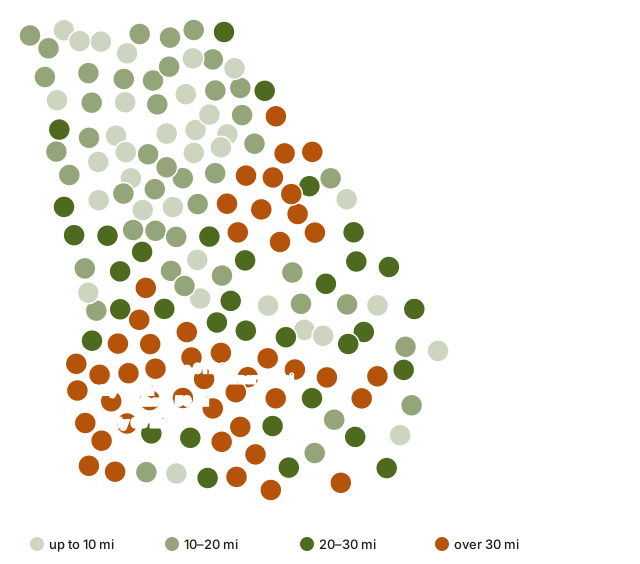
| County | Miles to closest |
|---|---|
| Early County | 63.0 |
| Lee County | 61.4 |
| Turner County | 60.0 |
| Clay County | 59.7 |
| Calhoun County | 59.3 |
| Terrell County | 57.8 |
| Irwin County | 56.7 |
| Ben Hill County | 55.0 |

Among the 55 detox listings, outpatient detox shows up in 31: you sleep at home and come to the program, often every day at the start. Residential detox is in 20; there you live on site around the clock. Hospital inpatient detox appears in 16, and it takes place in a hospital unit where medical staff are on hand. In 11 listings, outpatient and live-in detox are both available, so a move from one to the other can happen within one program.
Mild to moderate withdrawal can often be handled on an outpatient basis. Someone must be with you at home, and you check in with the provider each day until you are stable.[4] If withdrawal is moderate to severe, a hospital or a facility set up to treat it may be needed. In that setting, staff keep track of your vital signs and look out for delirium tremens.[4] If you can't tell how severe yours will be, have the program assess you before you decide.
| Setting listed | Listings | Where most are |
|---|---|---|
| Outpatient detox | 31 | Athens (3), Savannah (3) and Peachtree Corners (2) |
| Residential detox | 20 | Augusta (2), Monroe (2) and Savannah (2) |
| Hospital inpatient detox | 16 | Ball Ground (2), Atlanta (1) and Augusta (1) |
Unsure which setting to look for? Call (229) 270-2704 A paid referral line: calls are answered by a partner and never by a program in these listings.
Detox handles withdrawal and nothing more. It does not treat the addiction itself, and most people go on to longer care.[5]
Alcohol
It usually sets in by 8 hours after the last drink, though it can start days later. Symptoms are worst between 24 and 72 hours, and some last for weeks.
Heroin and similar short-acting opioids
It usually sets in by 12 hours after the last use. It is very uncomfortable, but it is not a threat to life.
Methadone
It usually sets in by 30 hours after the last dose, which is later than with heroin.
These times come from MedlinePlus (NIH).[4][5]
Nausea, a racing heart and seizures can follow when someone stops suddenly after long, heavy drinking.[6] The severe form, delirium tremens, brings on confusion, fever and hallucinations.[4] Sedatives are given, and doctors check blood pressure and heart rate closely.[4] You will find alcohol detox in 35 of the 55 listings for Georgia.
Methadone or buprenorphine can ease withdrawal, and with buprenorphine, detox can be shorter.[5] 42 of the 55 listings name buprenorphine, 19 name methadone, and 51 say medication is a routine part of their detox.
Choose the next step before detox starts. Options include residential care, medication, counseling or an intensive outpatient program.[5] Residential care is also listed at 31 of these facilities, and 18 list intensive outpatient too, so a person can keep the same team. Check the listings for inpatient rehab and outpatient programs.
This table lists each program that has a detox entry with SAMHSA (November 16, 2026): the detox setting it lists and whether it takes Georgia Medicaid. The 55 SAMHSA listings fit in 53 rows, since an organization's sites in one city are combined into a single row. A program's own page gives its address, its services and other options nearby.
What to check in a listing
SAMHSA describes five signs of quality treatment. For each one, the count below shows how many Georgia medical detox entries report it to SAMHSA.
54 of the 55 Georgia medical detox entries show CARF or Joint Commission accreditation. The state license is a separate question to ask; DBHDD issues those licenses.
In 53 of 55 entries you will find medication for opioid or alcohol use, for example methadone, buprenorphine or naltrexone.
53 of the 55 entries name at least one of motivational interviewing, cognitive behavioral therapy or contingency management.
0 of the 55 entries offer couples or family therapy.
55 of the 55 entries mention support after discharge, for instance peer support or help with housing.

How is medical detox paid for?
26 of the 55 facilities accept Medicaid and 9 list a sliding fee scale.
No entry here lists detox as free for all. Income-based pricing shows up at 9 of the 55 facilities. 28 list public funds (county, state or federal) for people without coverage, and 5 list SAMHSA block grants. With no insurance, start by asking about these; see low-cost listings.
Enter a program's quote in the cost calculator.
Free and confidential, answered 24/7. A paid referral line: calls are answered by a partner and never by a program in these listings.
The Georgia Rehab directory editors held this page up against the sources above on November 16, 2026. How it works.
Before choosing medical detox
SAMHSA's FindTreatment.gov locator shows 341 addiction treatment facilities in Georgia (as of November 16, 2026); 55 list medical detox.
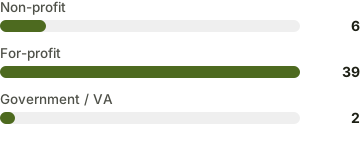
They span 42 cities and 32 counties; the table ranks the top 15. 6 of the 55 are non-profit; 2 are government or VA.
Savannah has the most, with 4, followed by Athens (3), Atlanta (2) and Augusta (2).
By county, Gwinnett County comes first, with 5 entries. Another 37 cities have one or more entries each; you can see all of them in the directory of all 341 centers arranged by city.
Usually: Georgia Medicaid at 26 of 55, Medicare at 30, private insurance at 47.
If uninsured: 9 price by income, 28 take public funds. The most Georgia Medicaid entries are in Athens, Columbus and Savannah, level at 2 each. Ask which plans each of the 26 bills, or use the referral line (the line is paid; calls are answered by a partner).
12 of 55 take children and adolescents, 19 serve veterans, 5 serve in Spanish, 20 take court referrals. Georgia Medicaid at 9 of 12 teen programs, TRICARE at 13 of 19 veterans programs; unsure which of 55 to pick? Ask a program, or use the referral line (the line is paid; calls are answered by a partner).
It varies with the substance and with how much was taken.
With alcohol, withdrawal usually begins in the first 8 hours after a last drink, is at its peak from 24 to 72 hours, and can leave some symptoms for weeks. From the last heroin use, opioid withdrawal takes about 12 hours to begin; from the last methadone dose, about 30. Buprenorphine can make the process shorter. Treatment of the addiction usually carries on past detox.
Often, yes, as long as the withdrawal is mild to moderate and you have someone to stay with you. Outpatient detox is listed for 31 of the 55 entries in Georgia.
If the withdrawal is moderate to severe, it may require a hospital, or a different facility that can treat it. 11 facilities on this list have both settings.
Many people begin their care with detox.
Staff keep watch and help with withdrawal. It can be dangerous to stop heavy drinking without help. Look at inpatient & residential rehab and outpatient, IOP & PHP; 31 of these 55 also list residential care, 44 outpatient. 43 of the 55 treat mental health too.
Weighing medical detox? Call (229) 270-2704 A paid referral line: calls are answered by a partner and never by a program in these listings.
Detox by location