


House of TIME Inc
1200 Wynnton Road, Columbus
Payment per SAMHSA: no payment in its SAMHSA record
Kinds of care
DetoxResidential and inpatient rehabIOP, PHP, outpatientMAT programs (medication-assisted)Dual-diagnosis careAlcohol treatmentDrug treatmentPrograms by populationSober homes and transitional housingPayment for rehabRecords as of November 16, 2026
A sober home or transitional housing is a drug-free place to live when treatment is over. This is housing; it is not treatment. 16 SAMHSA listings in Georgia offer it.
It helps to have the ZIP code and the insurance card at hand, whether yours or a loved one's. A paid referral line: calls are answered by a partner and never by a program in these listings.
12 of 16 programs, per SAMHSA FindTreatment.gov, November 16, 2026. Sort: most listed services first, then A–Z. Listing is free; a partner pays for the referral line. How listings are ordered.
Unsure where to look first? Call (229) 270-2704 A paid referral line: calls are answered by a partner and never by a program in these listings.
1200 Wynnton Road, Columbus
Payment per SAMHSA: no payment in its SAMHSA record
162 Hampton Lane, Leesburg
Payment per SAMHSA: no payment in its SAMHSA record
112 Lanthier Street, Winder
Payment per SAMHSA: Medicaid · Medicare · Private health insurance
Accreditation in its SAMHSA record: CARF
116 Peachtree Court, Peachtree City
Payment per SAMHSA: Private health insurance · TRICARE
Accreditation in its SAMHSA record: CARF
3400 Cypress Lake Road, Statesboro
Payment per SAMHSA: Medicaid · Medicare · Private health insurance
Accreditation in its SAMHSA record: CARF
1820 Water Place SE, Atlanta
Payment per SAMHSA: Private health insurance
Accreditation in its SAMHSA record: CARF
53 Perimeter Center East, Atlanta
Payment per SAMHSA: Private health insurance · TRICARE
Accreditation in its SAMHSA record: Joint Commission
2815 Clearview Place, Atlanta
Payment per SAMHSA: no payment in its SAMHSA record
Accreditation in its SAMHSA record: Joint Commission
600 Coastal Village Drive, Brunswick
Payment per SAMHSA: Medicaid · Sliding fee, by income
Accreditation in its SAMHSA record: CARF
2217 Pineview Drive, Valdosta
Payment per SAMHSA: Medicaid · Medicare · Private health insurance
Accreditation in its SAMHSA record: Joint Commission
207 North Anderson Drive, Swainsboro
Payment per SAMHSA: no payment in its SAMHSA record
Accreditation in its SAMHSA record: CARF
2725 Pine Grove Road, Cumming
Payment per SAMHSA: Sliding fee, by income
Sources: public agencies, not advertisers
Georgia: 16 SAMHSA-listed facilities for sober living and transitional housing (November 16, 2026)[1]; most sit in Atlanta (3), Brunswick (1) and Columbus (1). 38% take Medicaid; 2 have a sliding fee scale.
What the listings show


sober living and transitional housing listings per city (16 in all)
| City | Offer it | Total listed |
|---|---|---|
| Atlanta | 3 | 42 |
| Brunswick | 1 | 3 |
| Columbus | 1 | 7 |
| Cumming | 1 | 5 |
| Jefferson | 1 | 2 |
| Leesburg | 1 | 1 |
| Macon | 1 | 6 |
| Mcdonough | 1 | 2 |
| Peachtree City | 1 | 1 |
| Statesboro | 1 | 8 |
| Swainsboro | 1 | 3 |
| Union Point | 1 | 1 |
| Valdosta | 1 | 7 |
| Winder | 1 | 4 |
These residences provide housing free of alcohol and drugs, along with house rules and peer support. Most of them provide no clinical care. For Georgia, the records show 16 listings with transitional housing or a sober home, and 189 programs that help clients find housing once treatment ends.
Unsure where to look first?
Atlanta has 3 of the 16. Reach a program, or dial the referral line below.
A paid referral line: calls are answered by a partner and never by a program in these listings.
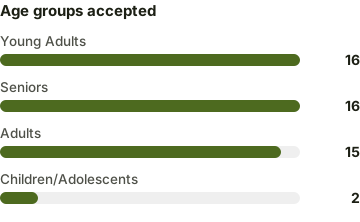
2 of 16 take children and teens; 11 serve veterans; 1 serve in Spanish.
Most often: Young Adults (16 of 16), Seniors (16 of 16) and Adults (15 of 16).
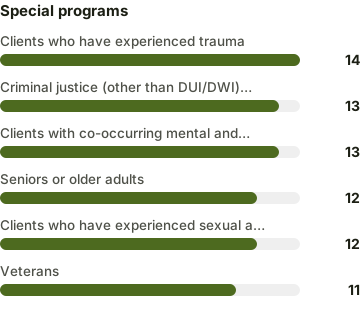
Most often: Clients who have experienced trauma (14 of 16), Clients from the justice system (not DUI/DWI) (13 of 16) and Clients with both mental health and substance use disorders (13 of 16).
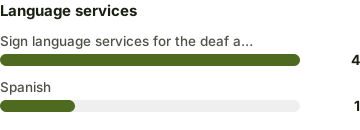
Most often: Sign language for clients who are deaf or hard of hearing (4 of 16) and Spanish (1 of 16).
Each program reports this itself.
Most often: Residential/24-hour residential (12 of 16), Long-term residential (11 of 16) and Outpatient (10 of 16).

Most often: Mentoring/peer support (15 of 16), Housing services (14 of 16) and Self-help groups (13 of 16).

Most often: Naltrexone used in Treatment (8 of 16), Buprenorphine used in Treatment (6 of 16) and Methadone used in Treatment (1 of 16).

Most often: Cognitive behavioral therapy (16 of 16), Relapse prevention (16 of 16) and Substance use disorder counseling (16 of 16).

Median straight-line distance from a Georgia county center to the closest sober living and transitional housing listing: 30.5 miles; 80 of 159 counties are over 30 miles away.
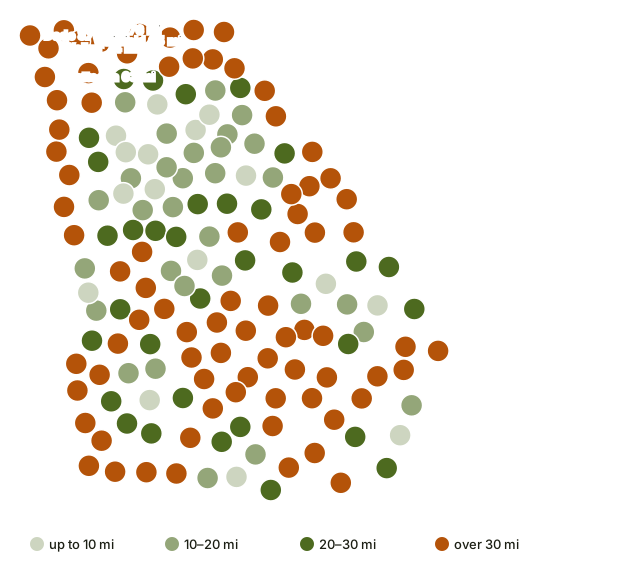
| County | Miles to closest |
|---|---|
| Dade County | 87.4 |
| Catoosa County | 76.4 |
| Walker County | 73.9 |
| Whitfield County | 64.8 |
| Chattooga County | 62.8 |
| Ben Hill County | 61.2 |
| Bacon County | 60.8 |
| Seminole County | 60.3 |
What to check in a listing
SAMHSA describes five signs of quality treatment. For each one, the count below shows how many Georgia sober living and transitional housing entries report it to SAMHSA.
12 of the 16 Georgia sober living and transitional housing entries show CARF or Joint Commission accreditation. The state license is a separate question to ask; DBHDD issues those licenses.
In 9 of 16 entries you will find medication for opioid or alcohol use, for example methadone, buprenorphine or naltrexone.
16 of the 16 entries name at least one of motivational interviewing, cognitive behavioral therapy or contingency management.
0 of the 16 entries offer couples or family therapy.
16 of the 16 entries mention support after discharge, for instance peer support or help with housing.

How is sober living and transitional housing paid for?
6 of the 16 facilities accept Medicaid and 2 list a sliding fee scale.
Enter a program's quote in the cost calculator.
Free and confidential, answered 24/7. A paid referral line: calls are answered by a partner and never by a program in these listings.
The Georgia Rehab directory editors held this page up against the sources above on November 16, 2026. How it works.
Before choosing sober living and transitional housing
SAMHSA's FindTreatment.gov locator shows 341 addiction treatment facilities in Georgia (as of November 16, 2026); 16 list sober living and transitional housing.
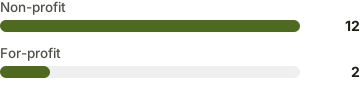
They span 14 cities and 15 counties; the table ranks the top 14. 12 of the 16 are non-profit; 0 are government or VA.
Atlanta has the most, with 3, followed by Brunswick (1), Columbus (1) and Cumming (1).
By county, DeKalb County comes first, with 2 entries. Another 9 cities have one or more entries each; you can see all of them in the directory of all 341 centers arranged by city.
Usually: Georgia Medicaid at 6 of 16, Medicare at 4, private insurance at 7.
If uninsured: 2 price by income, 13 take public funds. The most Georgia Medicaid entries are in 6 cities, level at 1 each. Ask which plans each of the 6 bills, or use the referral line (the line is paid; calls are answered by a partner).
2 of 16 take children and adolescents, 11 serve veterans, 1 serve in Spanish, 13 take court referrals. Georgia Medicaid at 2 of 2 teen programs, TRICARE at 5 of 11 veterans programs; unsure which of 16 to pick? Ask a program, or use the referral line (the line is paid; calls are answered by a partner).
A sober home or transitional housing is a drug-free place to live when treatment is over.
This is housing; it is not treatment. Look at detox and inpatient & residential rehab; 13 of these 16 also list residential care, 10 outpatient. 14 of the 16 treat mental health too.
Weighing sober living and transitional housing? Call (229) 270-2704 A paid referral line: calls are answered by a partner and never by a program in these listings.
Sober living and transitional housing by location